


Upptäck Mímis

AI-agent för smartare e-handel
Updated: 2026-08-06
First published: 2025-09-25
Viskan’s take on composable commerce: flexibility without losing control
Composable commerce has become a hot topic in e-commerce. The idea is simple: combine the best solutions from different vendors into a tailored ecosystem for your e-commerce operation. Used well, it gives you enormous flexibility and the ability to adapt quickly to changing market demands. But with multiple systems and integrations also come risks: higher costs, more complexity and unclear ownership of data.
So how do you get the benefits of composable without falling into those traps?
In short:
Composable commerce gives e-tailers the flexibility to combine best-of-breed solutions from different vendors, but every integration adds both complexity and cost. The most common pitfalls are unclear data ownership, fragmented architecture, scattered expertise and hidden costs. Success depends on a clear system map, a stable core for critical flows, and assessing every integration against real business value. Viskan’s model combines a stable platform core with CMS, PIM and OMS, together with an open architecture via Viskan open API.
What are the benefits of composable commerce?
Composable commerce gives e-tailers three main advantages that make it attractive for businesses that want to stay ahead:
- Flexibility in system choice. You can add or replace services as new needs arise. When you choose to integrate third-party solutions for things like ratings & reviews or user-generated content, you get a service from a company focused entirely on its speciality and offering expert capability in that area.
- Faster innovation. Specialised vendors in areas such as user-generated content, ratings and reviews, or AI-driven shopping assistants develop their systems faster than an all-in-one platform can. This is a smart strategy for simple integrations that are not especially complex or architecture-critical.
- Step-by-step scalability. You can keep building over time instead of having to replace the whole platform. The strength of composable is that each system has core functionality optimised to do its specific job as well as possible.
That is why many e-tailers see composable as a way to stay ahead and respond quickly to changing customer behaviour.
What challenges come with composable commerce?
Composable commerce also brings challenges that e-tailers need to manage if they want it to work. Every integration you add increases both complexity and cost.
The challenges with composable tend to appear when too many parties become part of the core architecture itself. For composable commerce to be powerful and work smoothly, all systems need to work seamlessly together in a well-defined architecture where it is clear which system is the master source and how all parts fit together.
Common pitfalls to avoid:
Unclear ownership of data: Who is the master for product information, stock levels and order flows? Without a clear architecture, important data can be overwritten or end up in conflict.
- Fragmented architecture: The more systems you build into the core, the harder it becomes to maintain the full picture and overall stability.
- Scattered expertise: The more different systems you use, the more your team needs to master multiple technical environments. For smaller e-commerce teams, it can be difficult to maintain the right level of expertise over time. The risk is that you become heavily dependent on external consultants to hold everything together instead. That can make your organisation less flexible and increase costs over time.
- Hidden costs: Licences, integrations and maintenance across lots of smaller systems can easily end up costing more than a consolidated solution.
So making composable work takes more than technology. It takes a considered strategy and clear governance.
Why is data ownership critical in composable commerce?
Serkan Selcuk, Product Owner at Viskan, explains what can happen when a composable architecture becomes too messy and there is no clear owner of the master data:
"If an e-tailer has an e-commerce platform and connects an ERP, POS system, product information management system and perhaps another source for image assets, a few important questions come up. Where is the master source? Where does the data start, and how is it passed between the different systems? If it is not clear who owns the master data and which parts are only allowed to make changes, someone could be writing a product description in the product information management system only for it to be overwritten because someone else owns the master data. Or stock discrepancies can arise if stock levels are adjusted in the ERP while another part also has the function of updating stock levels, but it is unclear how they connect in the flow. There has to be clarity across all parts and flows to avoid ending up in those situations."
Serkan also stresses how important it is to keep a close eye on cost versus value in your composable architecture:
"With every system and integration you add, both complexity and cost increase. Think carefully about what actually adds value, and make sure the systems you integrate bring real value to your business."

Viskan’s way of composable commerce
At Viskan, we have worked with e-commerce for more than 25 years, and we have seen both the successes and the pitfalls of different architectures. Our experience is clear: e-tailers need both stability and flexibility.
That is why we developed Viskan’s way of composable commerce. Our platform gives you:
- A stable core: The market’s fastest e-commerce engine with ready-made core features for CMS, PIM, OMS and order flows. That gives you a flexible, scalable foundation you can build on based on your business needs.
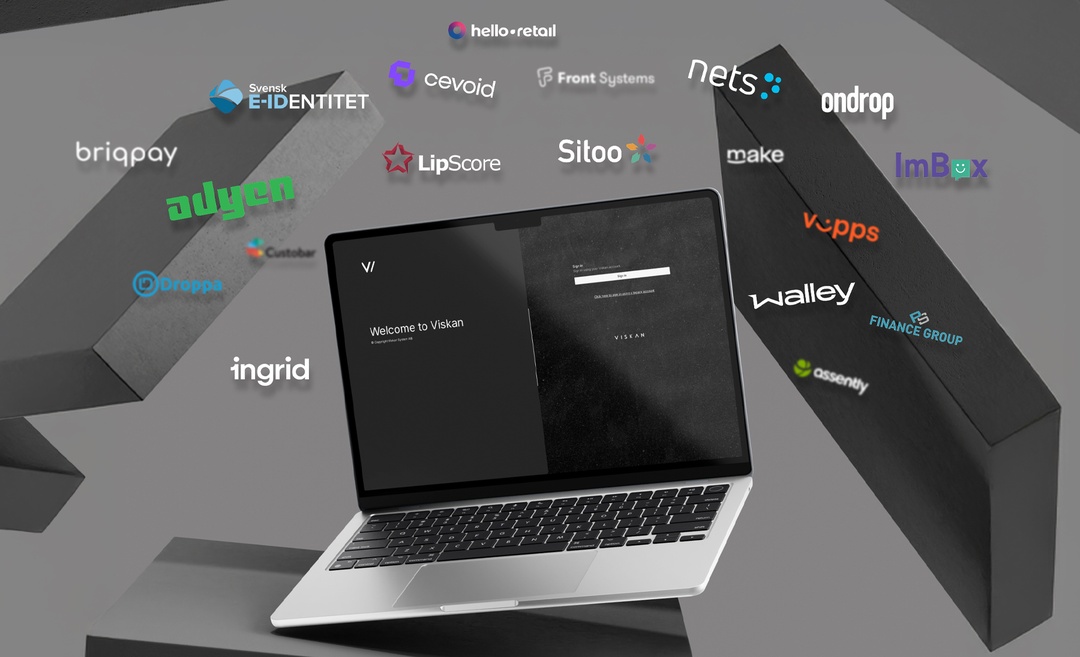
- Open architecture: Via Viskan open API, you can connect third-party solutions where they genuinely make a difference, such as robotic warehouses, payment services or AI-driven recommendation engines.
- Seamless integrations: We already have ready-made integrations to many of the market’s most in-demand systems, which reduces both cost and lead time.
- Customer-driven ecosystem: We continuously develop new integrations based on our customers’ needs and what we see in the market.
In short, we combine the security of a strong platform with the freedom to tailor your e-commerce setup.
How do you make composable commerce work?
If you are considering composable commerce or already working with it, here is Serkan’s advice on how to create value without getting stuck in complexity:
- Map out your system landscape. Create clear diagrams of flows and master data. It saves both time and problems as your organisation grows.
- Assess the value. Only connect systems that deliver real business value. Avoid integrations that do not contribute to sales or the customer experience.
- Prioritise stability in critical flows. Payments and order management must always be reliable. Build for stability in the back office and be more flexible in the front end.
- Take a long-term view of cost. What looks cheap and flexible at the start can become expensive as complexity grows.
- Put the customer at the centre. Technology is only a means to an end. What matters most is strengthening the buying experience.
- Make sure your team can meet the skills requirements. Every new system requires knowledge and ongoing management. In smaller teams, it can be difficult to maintain broad technical expertise over time, which risks making you too dependent on consultants. So choose an architecture that matches both your needs and your resources.
Conclusion: composable commerce
Composable commerce is not a quick fix, but a strategy that requires the right balance between innovation and control. If you choose a stable core platform and build on it with well-considered integrations, you can create a flexible, future-proof e-commerce setup.
With Viskan, you get the best of both worlds: the security of a proven core and the freedom to grow on your own terms.
Ready to take the next step towards more flexible e-commerce? Let’s talk about how Viskan can help you build a composable architecture that lasts.
FAQ: Common questions about composable commerce
Article subject matter expert

Serkan Selcuk – Product Owner, Viskan
Serkan Selcuk is Product Owner at Viskan with more than 17 years of experience in e-commerce solutions. He is an authority on developing scalable e-commerce platforms and strategic third-party integrations that meet modern B2B and B2C e-commerce needs. Serkan combines deep technical expertise with commercial understanding to help businesses optimise their e-commerce strategy and build future-proof solutions.
Serkan’s areas of expertise include:
- E-commerce platform strategy for growth
- Smooth integrations with ERP, PIM and logistics systems
- Development of scalable systems for high traffic volumes
- Customer-centric solutions for the best possible user experience (UX)
Ready to take the next step?
Get in touch and we'll show you how Viskan can accelerate your e-commerce.